14k vs 18k gold, and the difference you cannot see
The number stamped inside the band tells you almost everything. The band itself tells you almost nothing.
What the karat number is actually counting
Karat counts parts out of 24. Pure gold is 24 karat, too soft for daily wear, so every ring on a counter is an alloy. 18k is 18 parts gold to 6 parts other metal, 75 percent pure. 14k is 14 parts gold to 10 parts other metal. That works out to 58.3 percent pure.
That gap, 75 against 58.3, is the whole story. The color, the price, the durability, the way white gold behaves, all of it comes out of that one number.
You cannot tell 14k from 18k by looking
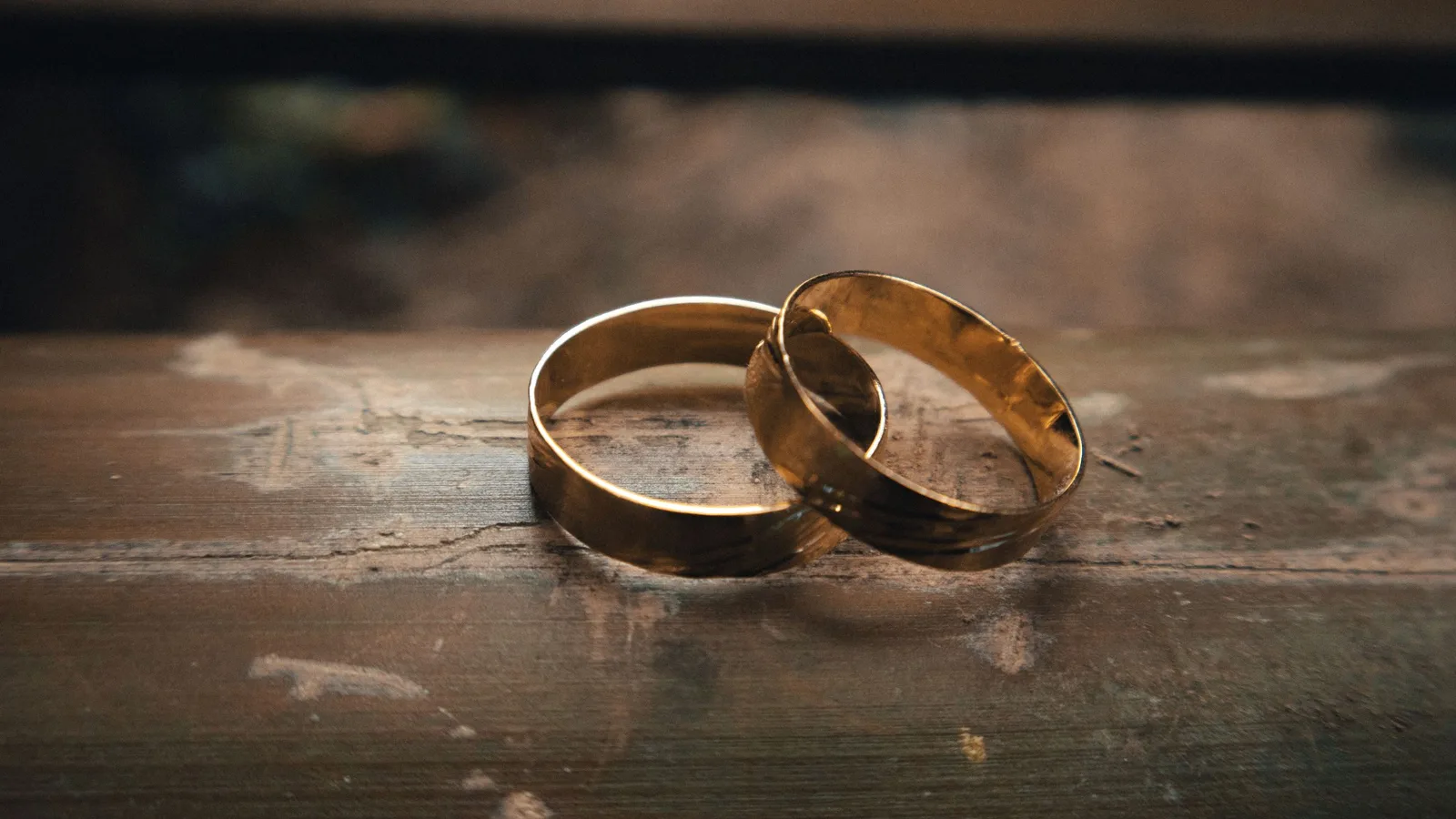
Hold an 18k band next to a 14k band of the same yellow gold and most people cannot call it. The gap is closer than a shade of paint. Ordinary light erases it. The only honest tell is the stamp inside the band. Not the color. Not the price. The stamp.
The tradeoff nobody states plainly
More alloy means more hardness. That is why 14k is the harder metal and 18k the softer one, which runs backward from what the price tag implies.
- 14k resists scratches and dents better, which matters most on a ring worn every day.
- 18k shows a richer, warmer yellow, better suited to a piece that comes off at night.
- Neither karat is more "real" gold in any sense a photograph can show. The difference shows up in years of wear, not in a picture.
- White and rose gold follow the same math. Color comes from the alloy, not the karat, so 14k and 18k white gold can look identical while wearing very differently.
White gold has a cost that has nothing to do with karat
Yellow gold alloyed pale is still faintly yellow, so white gold gets plated in rhodium to look bright white. That plating wears, usually first on the back of the shank, at the same rate whether the ring underneath is 14k or 18k. Choosing 18k buys you nothing here. Only yellow or rose gold does.
So which one, honestly
14k for anything worn daily and knocked against the world. A wedding band belongs here.
18k for pieces that live in a box between wearings. It also suits anyone who prefers the deeper color enough to trade away some scratch resistance.
A jeweler who calls 18k simply better is answering a different question than the one you asked. Ask to see both in the same light. Then ask what the stamp actually says.
Common questions
Is 18k gold better than 14k gold?
Better at different things, not overall. 18k has more pure gold, 75 percent against 58.3 for 14k, so the color reads richer, though that same purity also makes it noticeably softer and easier to scratch. 14k holds up better to daily wear because it carries more alloy. Neither is objectively correct, it depends on how the piece gets worn.
How can I tell if my gold is 14k or 18k?
Look for a hallmark stamped inside the band, near the seam. "14K" or "585" both mean 14 karat, since 585 is the purity per thousand. "18K" or "750" both mean 18 karat. Color and price are not reliable, the visual gap is subtle and price depends on weight and labor too.
Does white gold need more care than yellow gold?
Yes, regardless of karat. White gold is alloyed pale and then plated in rhodium to look bright white, a coating that wears off gradually with ordinary daily use and needs periodic replating every few years to stay white rather than slowly fading toward a dull champagne color. Yellow and rose gold have no plating to wear off, one real reason to prefer them for daily wear.
Is 14k or 18k gold better for an engagement ring or wedding band?
14k is the more common choice for daily wear, since the extra alloy resists scratching and denting over years. 18k suits someone who prioritizes color and accepts more careful handling. Many people cannot spot a real difference once the ring is on the hand, which makes the practical case for 14k the stronger one.
Can I get 14k and 18k gold jewelry repaired or resized in Montclair?
Yes. Astra Jewelers at 250 Bellevue Ave, 2nd Floor, Montclair, NJ 07043 resizes and repairs gold jewelry of any karat, origin and condition, Monday to Friday, 10:00am to 6:00pm, Saturday until 5:00pm. White gold pieces are checked for rhodium plating as part of the estimate, since resizing often disturbs the plating near the join. Estimates are always free.