
What that water resistance number means
The number on your case back is a laboratory result, not a promise. Here is what it was measured under, what it does not cover and what happens to it the day somebody opens your watch.
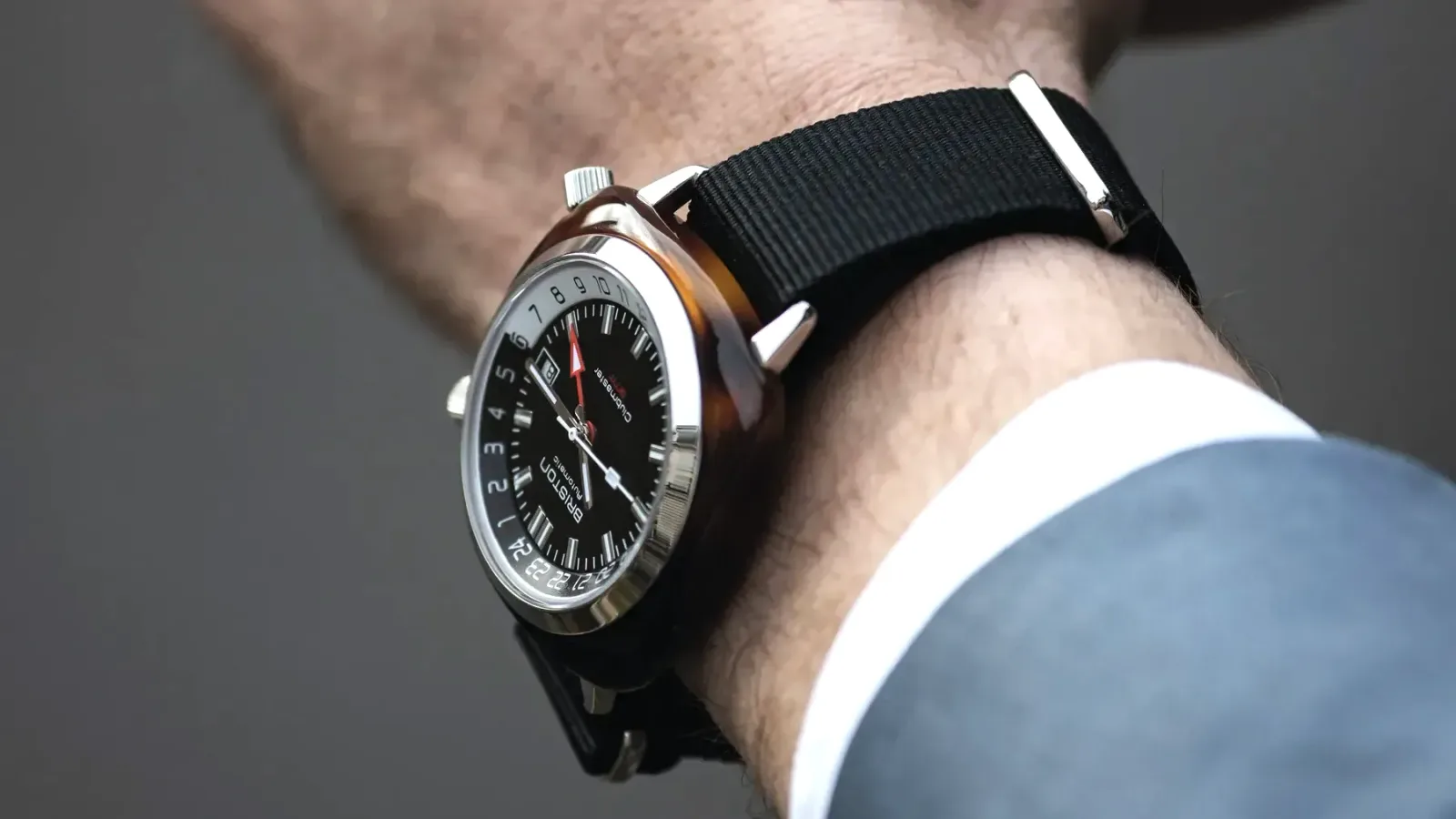
Can you swim with a 30m water resistant watch?
No. A 30m rating covers handwashing, rain and the odd splash. It does not cover swimming. It does not cover the shower either. That surprises people, reasonably, because 30 meters sounds like a lot of water to be resistant to.
The gap between what the number says and what the watch survives is the whole subject. It comes down to how the number is produced.
What the number on the case back measures
It measures a watch sitting still in a pressure chamber. The relevant standard for an ordinary water resistant watch is ISO 22810. Under it a watch is tested to 100 percent of the rating it claims. A 30m watch is tested at the pressure of 30 meters of water.
Two things about that test matter more than the depth figure.
- It is static. The watch does not move, the water does not move and nothing changes temperature.
- It is a sample test. Under ISO 22810 the manufacturer tests a sample of production, not every individual watch that leaves the factory.
So the marking describes what that model survived in a tank on a good day. Your particular watch was probably never in the tank.

Why swimming is harder on a watch than the depth suggests
Because you move. Water pushed against a case by a swimming stroke arrives at a higher pressure than the same water sitting still. The pressure spikes rather than holding steady. A dive into a pool does the same thing in a shorter moment.
Add the parts of daily life a pressure chamber never simulates. Hot water expands metal and gaskets at different rates. Soap and shampoo carry surfactants that break surface tension and get into places plain water would not. Sunscreen and skin oil sit on rubber and slowly degrade it.
None of that is on the case back. None of it is the manufacturer being dishonest. A single number cannot carry it.
What the DIVER marking means
A watch marked DIVER'S was tested under a different and much harder standard, ISO 6425. The differences are worth knowing because they explain what the ordinary rating leaves out.
- It is tested to 125 percent of its rating, held for two hours, so there is margin above the claim rather than exactly the claim.
- Every single watch is tested, not a sample of the production run.
- The testing goes past water. Shock resistance, corrosion resistance and magnetic resistance are all part of it.
That is why the word appears on the dial. It is a claim a manufacturer has to earn per watch. It is also the reason a genuine dive watch and a dress watch quoting the same depth are not the same object.
A rating is a factory number, not a permanent one
Water resistance lives in a few millimeters of rubber. Case back gaskets, crown gaskets and crystal gaskets are the only things standing between the movement and the outside world. Rubber has a shelf life. It hardens, it flattens where it has been compressed and it shrinks slightly as it ages.
A ten year old watch wearing its original gaskets is not a 100m watch any more, whatever the case back still says. It is a watch that used to be one.
This is the part almost nobody is told at the counter. It is also the part that costs people watches.
What each rating is good for
- 30m or 3 ATM. Rain, handwashing, splashes. Not the shower, not the pool.
- 50m or 5 ATM. The same, with more margin. Still not laps.
- 100m or 10 ATM. Swimming and snorkeling for a watch in good condition with sound gaskets.
- 200m or 20 ATM and above. Serious water use. This is the range where DIVER'S marked pieces live.
Read those as ceilings for a healthy watch rather than as guarantees. A 100m watch with a twelve year old crown gasket is a 100m watch on paper only.
What happens to the rating when we open your watch
Every battery change is a case back opening. Every case back opening breaks the seal that was doing the work. What goes back on afterward decides what your watch is rated for from that day, which is why we fit a fresh gasket and reseal rather than snapping the old one back into place.
Where the case allows it we pressure test afterward. Where it does not, we say so.
What we will not do is tell you a depth rating has been restored. Resealing restores the seal. Certifying a rating is a manufacturer test on manufacturer equipment. A jeweler who tells you otherwise after a fifteen minute battery change is telling you something they cannot know. If you swim with a watch, say so when you drop it off, because it changes what we check and what we tell you.
Astra Jewelers replaces watch batteries at the studio in Upper Montclair. The gasket work is part of the job rather than an upsell.
Common questions
Can I shower with a water resistant watch?
Better not to, at any rating. Hot water expands the case and the gaskets at different rates. Soap and shampoo carry surfactants that get past seals plain water would not trouble. A shower is a harder test than a swim for that reason. If a watch is going to get wet regularly, a 100m or higher rating with sound gaskets is the sensible floor.
What does 5 ATM water resistant mean?
5 ATM is 50 meters. It means the watch passed a static pressure test at the equivalent of 50 meters of water while sitting still in a chamber. It is fine for rain, handwashing and splashes. It is not a swimming rating, because a swimming stroke drives water at the case harder than still water at the same depth.
Is my watch still water resistant after a battery change?
Only if the gasket was replaced and the case was resealed properly. Opening the case back breaks the seal that was doing the work, so the answer depends entirely on what went back on. Astra Jewelers fits a fresh gasket and reseals as part of a battery change. We pressure test where the case allows. Nobody can certify a depth rating after a battery change. A jeweler who claims to is overstating what the job can do.
Why is no watch called waterproof any more?
Because resistance can be lost and proof cannot. Water resistance depends on rubber gaskets that harden and flatten with age, on a crown being pushed fully home and on a case that has not been knocked out of true. All of those change over a watch lifetime, so the honest word is resistant.
How often should watch gaskets be replaced?
Practically speaking, every time the case is opened, which for most quartz watches means every battery change. If a watch is never opened and is worn in water, the gaskets are still aging, so a check every few years is reasonable. Bring it to the studio at 250 Bellevue Ave, 2nd Floor, Montclair, NJ 07043 and we will look at the seals with you rather than guessing from the outside.
What is the difference between ISO 22810 and ISO 6425?
ISO 22810 covers ordinary water resistant watches. It tests to 100 percent of the claimed rating and only a sample of production is tested. ISO 6425 covers diver watches, tests to 125 percent of the rating for two hours, requires every individual watch to be tested and also covers shock, corrosion and magnetic resistance. A watch that meets ISO 6425 carries the word DIVER'S on the dial.